Michael Kensinger Q&A
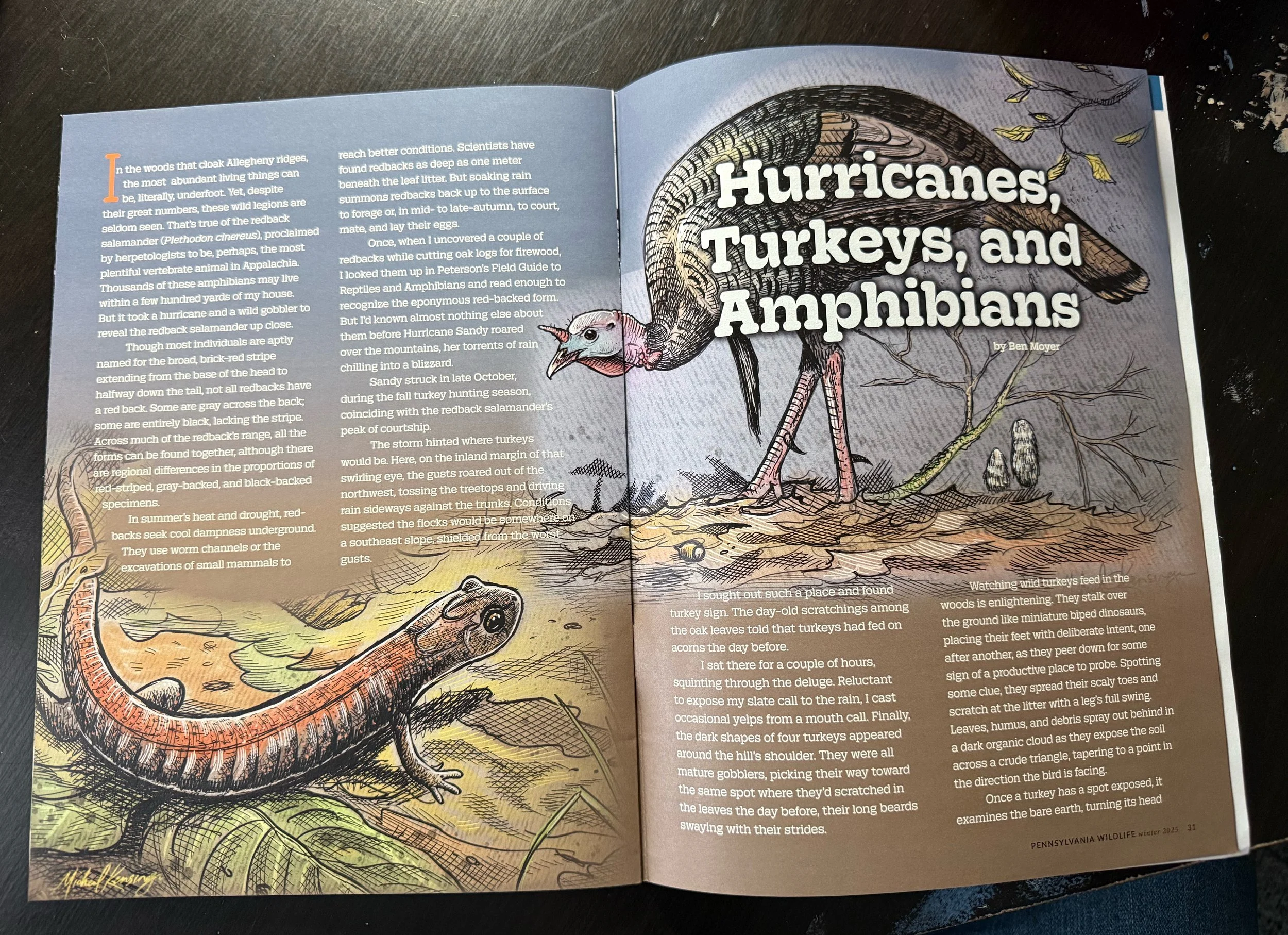
Michael Kensinger is quite a unique talent. He's a writer, artist, and conservationist. He's the President of the Juniata Audubon Society, a member of the Pennsylvanian Outdoor Writers Association, and an avid Birder! You very well may have seen his artwork or articles in Pennsylvania Outdoor News, Delta Waterfowl Magazine, and PA Wildlife Magazine. I'd like to personally thank Michael for his time, and I look forward to seeing his future work!
Q- Michael, you’re involved in so many things. Is there one thing that takes precedent between your writing, art, or your conservation efforts.
A- For me, writing, art, and conservation all feed each other. Sometimes the writing sparks the artwork; sometimes it’s the conservation work that inspires the story. And other times the art simply speaks for itself and for the species I’m trying to honor. But the conservation piece is essential. I don’t think you can truly love nature without standing up for it—that’s just how I see it. I’d feel like a poor excuse for a naturalist, artist, or outdoor writer if I didn’t take a stand for the thing that gives so much to me.
Q- You’re the President of the Juniata Valley Audubon Society. How long have you been active in conservation?
A- Conservation has always been part of who I am. Even as a kid, I was drawn to wildlife—checking my uncle’s bluebird boxes, counting eggs, and rescuing birds after window strikes. Not much has changed, except that now I’m a lot louder and more active about it.
I took my uncle’s passion for bluebird conservation and expanded it by forming the Friends of Tipton Wetlands group on Facebook. We formally “adopt” local wetlands and install nest boxes that benefit everything from Wood Ducks and bluebirds to flying squirrels, owls, and bats. I wanted to go beyond bluebirds with this project, and thanks to dedicated volunteers like my friend Frank Nale, we’ve had great success.
I’m also a certified Wildlife Capture & Transporter, permitted to rescue many species for rehabilitation. I keep the permit in my car because you never know when an animal will need help. Some cases end sadly, others happily—I’ve had the honor of helping re-release Great Horned Owls, waterfowl, squirrels, and more. I’ve scaled back recently as more transporters have stepped up in our region, which is a good thing.
I’m now in my final months as President of the Juniata Valley Audubon Society, though I’ll stay on the board as Past President and serve as a Director-at-Large. It’s been rewarding, but with my writing and art careers growing quickly, it’s time to pass the torch this April so I can focus more on that—while always keeping one foot firmly in conservation. I love JVAS, and always will.
Q- In your opinion, what’s something we can all do to help conservation efforts?
A- One of the easiest ways to make a real conservation impact from your armchair is by buying a Federal Duck Stamp. They cost about $25, and an incredible 98 cents of every dollar goes straight into protecting and purchasing wetlands. As a bonus, you get a beautiful, collectible piece of art that may even increase in value. (They aren’t postage stamps, though many post offices do sell them.)
Q- Your art is heavily inspired by nature. Do you know what you’re doing to draw, or do you let it happen?
A- When it comes to my nature and wildlife art, I always have a plan. While some sketches and doodles flow straight from my pen, the biggest lesson I’ve learned is that any art worth doing requires careful planning.
People often don’t realize how much study goes into realistic wildlife art. I rely on photo references, personal experience, and multiple rough sketches before ever touching a brush. My earlier work didn’t always reflect that—and you can see it—but that’s part of the learning process.
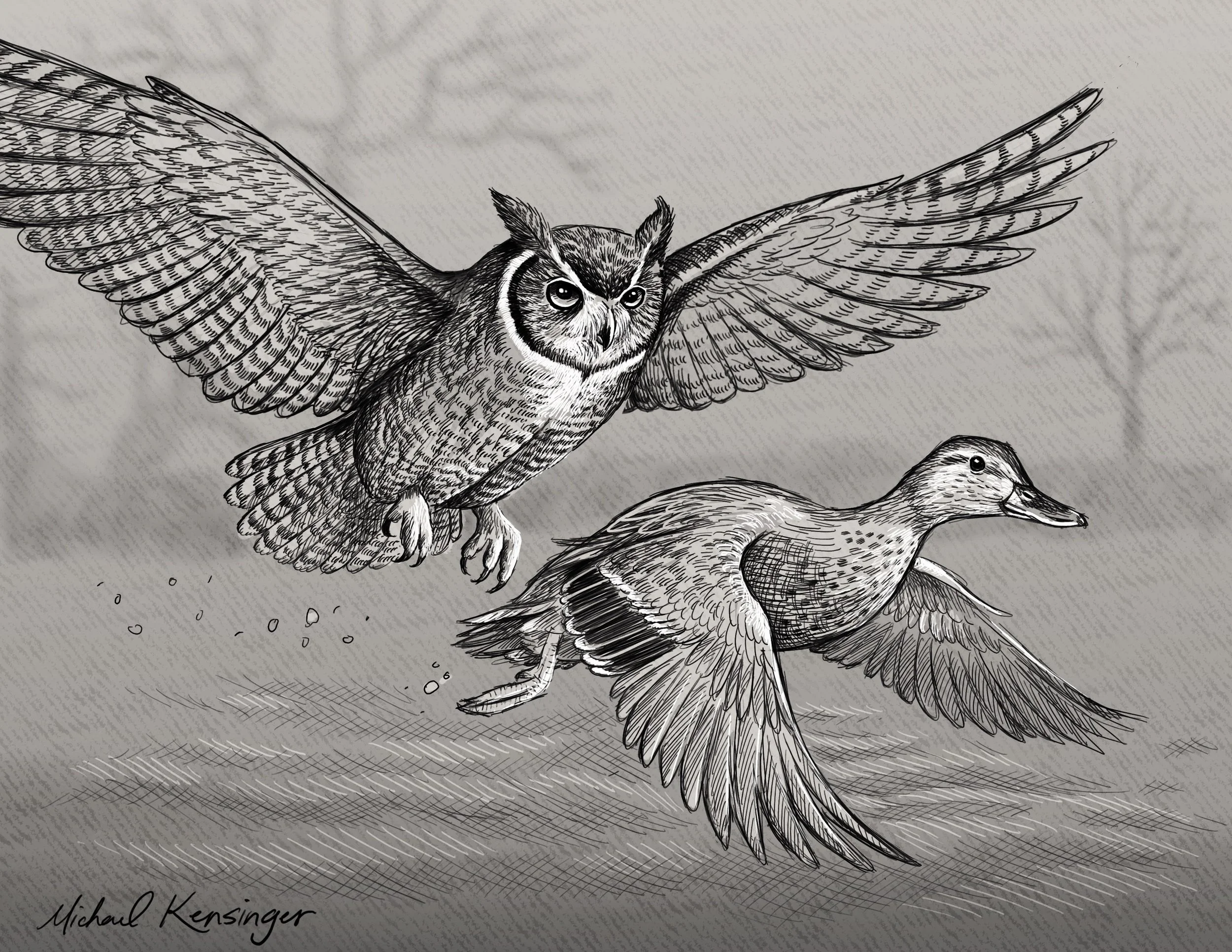
In recent years, my art has improved because I make sure every leaf, seed pod, and detail is accurate. Wildlife art buyers are usually very knowledgeable, and even small errors stand out. For example, a hen Mallard has an orange bill with dark mottling—not a solid yellow. If a painting shows otherwise, it likely came from a misinterpreted photo of a drake in eclipse plumage. Accuracy matters because seeing—and truly understanding—what you’re painting is everything.
Q- What’s your favorite thing to draw?
A- Birds, mushrooms, deer. It’s really hard to narrow it down to one thing because I’m passionate about all wildlife. Birds are what I draw most of though.
Q- What’s your favorite style to create?
A- I’d have to say the vintage-style pen and ink or “line and wash” (ink with faint color) illustrations are my favorite to do. Line is something that doesn’t actually exist, and the challenge of creating a dimensional scene and giving “mass” to a given subject with “line” is really a lot of fun. I know back in the day they used it a lot because it printed so nicely. But, I also find it very therapeutic, and a lot more freeing than say, photo realism. Photo realism allows less room for creativity, because you really have to nail everything. With the pen and ink/sketchbook style, my subjects feel more animated, lively, and also a bit of me — the artist — is allowed to shine through. In sharp contrast, when you are developing a photo realistic painting, your goal is really to eliminate as much of “you” as you can from the piece.
But yeah - for the publications I illustrate for, I generally do the pen and ink style with hatching and crosshatching. It lends itself well to nature journaling, outdoor art, and sort of speaks to the old days of wildlife art to me. Of course, I do it in a modern way as well.
Q- You’ve had the honor of your art being on federal stamps! What are any future goals you have?
A- Yes! My goal is to get my art on the FRONT of a Federal Duck Stamp. The artwork I did for the 2025/26 stamp is on the BACK, and features a graphite drawing i did of a shorebird called a Black Turnstone. What an honor. But I have yet to win the Federal Duck Stamp program and be featured on the actual stamp itself.
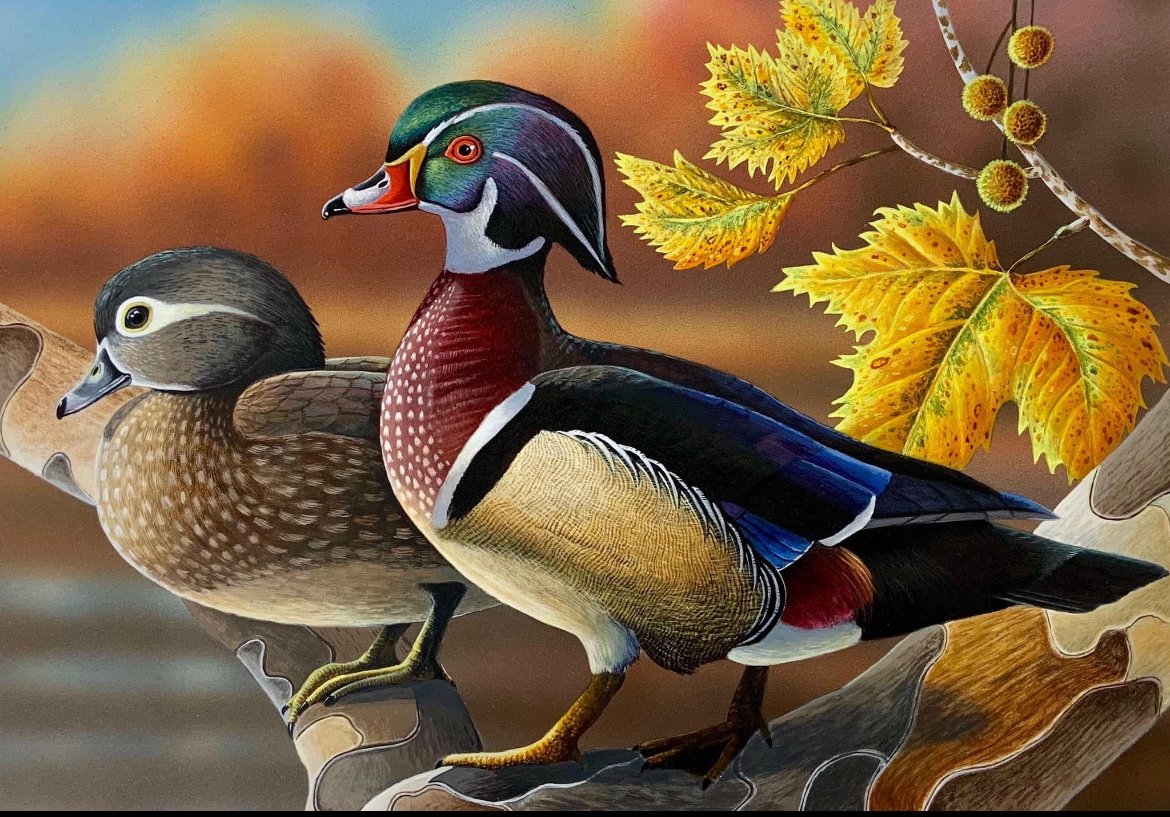
I have had the honor of winning Pennsylvania’s State Duck Stamp in 2021 with a painting of Wood Ducks titled “Sycamore Retreat”. Another goal I have is to publish author and illustrate some children’s books, and some regular naturalist-style books. Maybe eventually.
Q- What’s your favorite part about living in Pennsylvania?
A- We have so much to offer here. Within a very short drive you can be in agricultural land surrounded by beautiful farm scapes, or along a brook that snakes through a shady forest in the mountains. I’d say the change of seasons, the mountains, and the quality of natural experiences that are right at my finger tips.
Q- I often ask this question, as I feel we are all trying to figure it out. How do you find balance between your profession and personal life?
A- Balancing professional and personal life can be tricky when your work is also your passion. I love writing, art, and conservation, so it’s easy to get wrapped up in projects. I make it work by planning intentional downtime—playing video games, spending quality time with loved ones, or just relaxing. Those breaks recharge me and help me stay creative and focused when I’m back at work.
Q- I know that you dabble in fly fishing. What’s your favorite fly, and why?
A- I love the “Sexy Walt’s”. Basically - it’s the Walt’s Worm, but with a bright collar, and some added sparkly dubbing in the body. Plus, it’s a locally designed pattern. Fly fishing is so laid back most of the time. I’ve found it to be a lot of fun - but also time consuming. With my schedule it can be difficult to get the time I need to cover much stream with a fly…or…to tie flies which i also enjoy. I also do a lot of spin fishing. Short rod, ultralight gear - pack it in the car for a fun day of fishing when time is of the essence.
Q- How concerned are you with rising temperatures and extended periods of drought?
A- Very concerned. And even more concerning are the number of people who aren’t concerned about it at all. These changes affect every species I care about, from waterfowl to forest wildlife, and they make conservation work even more urgent. Habitat loss, stressed ecosystems, and shifting migration patterns are real threats I see firsthand in my fieldwork and observations. As someone who documents and celebrates wildlife through art and writing, I feel a responsibility to highlight these issues and support efforts to protect and restore the habitats that species—and ultimately we—depend on.
Q- When writing an article, how long do you think about the subject before deciding to write?
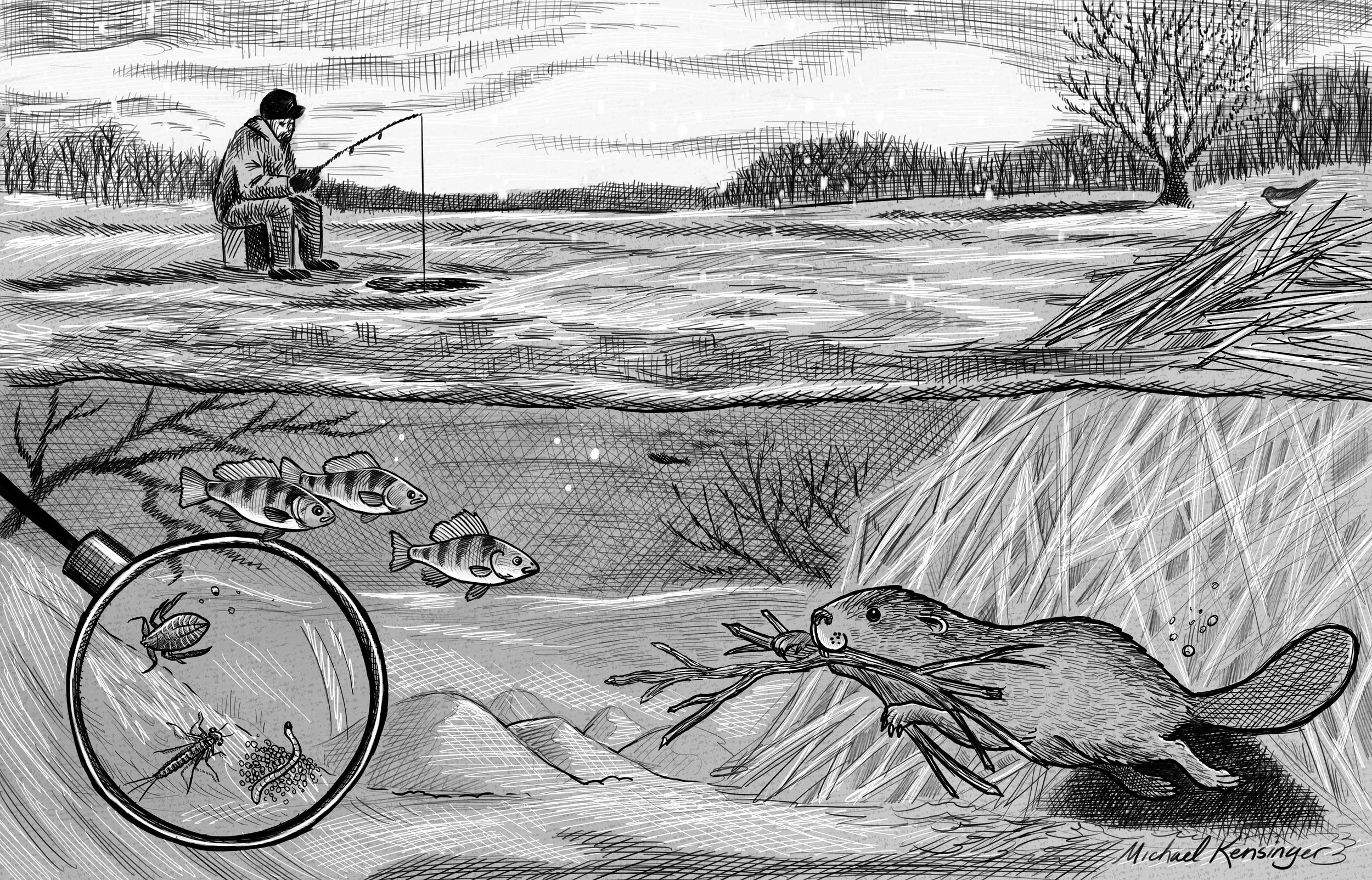
A- Not long. Usually it’s something that pops out at me based on what is inspiring me at the time. Therefore, since I enjoy the “research” aspect, I spend a great deal of time learning or digging deeper to make the article speak to readers. Most often, whatever I write about is something I feel needs to be brought into the limelight. For example, I recently wrote an article in PA Wildlife Magazine that featured “Life Beneath The Ice” - which features some species and tactics our wildlife use to survive winter. A lot of people either don’t think about that, or, they wonder about it. So I was like “Yeah, that’s what I want to write about for the winter issue!” Or sometimes I write about mushroom hunting because it’s super interesting, but also widely misunderstood.
Q- What's your advice for young artists and writers?
A- There is STILL a place for you in this industry. AI will not replace personal experience. I come from the school of thinking that says “People don’t buy what you do, they buy why you do it.” Don’t just write or make art - make it in a way that shares YOUR story as well. I realize that isn’t easy for everyone. Some people are very private, but I think that can be to their detriment. Whatever route you choose, follow it with passion. Or, follow them both with passion, as I have!
Q- What's your favorite species of bird and why?
A- I don’t have a favorite - because I love so many. I’d say one of my favorites is the Wild Turkey. Why? Because they are literally modern dinosaurs. I think studying a turkey can tell us a great deal about what smaller dinosaurs were like. I love their body structure, their habits, the diversity in the sounds they communicate with. It makes me wonder what dinosaurs actually looked like. They likely had colorful flesh (at least the males) and flushed them with color in elaborate displays. Did they all roar? Of course not. Who knows. Maybe some made sounds similar to the gobble of today’s modern dinosaur; the wild turkey.
Q- What are your goals for 2026?
A- I’d like to get some illustration published in a paleoart magazine. Something to do with dinosaurs. I actually have a deep rooted interest in dinosaurs and I think paleoart is very freeing because we know so little about how dinosaurs actually looked in terms of color that artistic interpretation is extremely flexible and creative.
Q- If I had a time machine and gave you a free trip, where would you go and why?
A- As long as I was well-protected (ha!) I would love to go back to the Cretaceous Period and see/study Triceratops and do field sketches of all the dinosaurs of that era. It would be fascinating.